
AMMOBIA's TECHNOLOGY
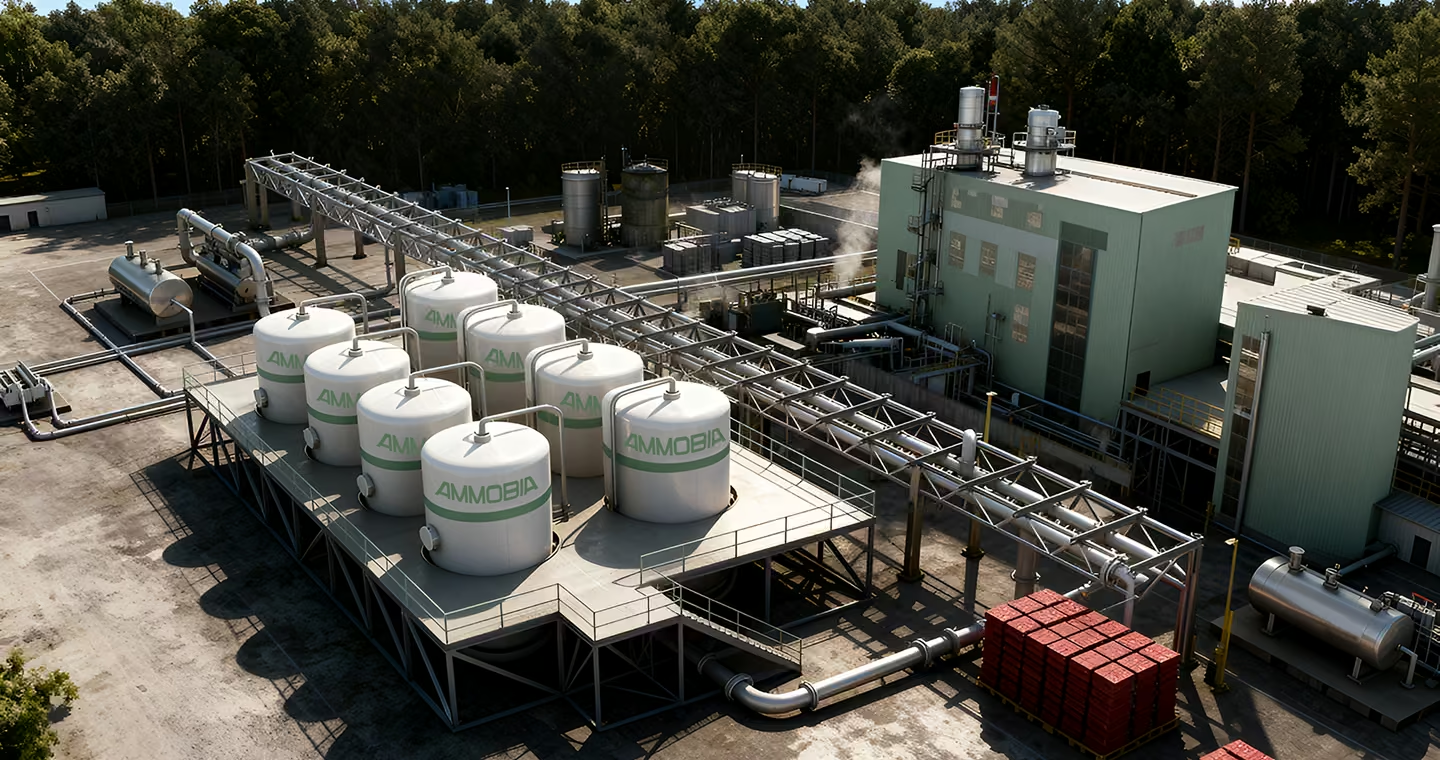
Introducing Haber-Bosch 2.0
Ammobia's low-pressure, high-conversion synthesis technology evolves a century old process to meet today's needs - at half the CapEx
Modular by design. Scalable by demand.
Low-pressure process technology enables supply chain efficiency and flexible deployment.
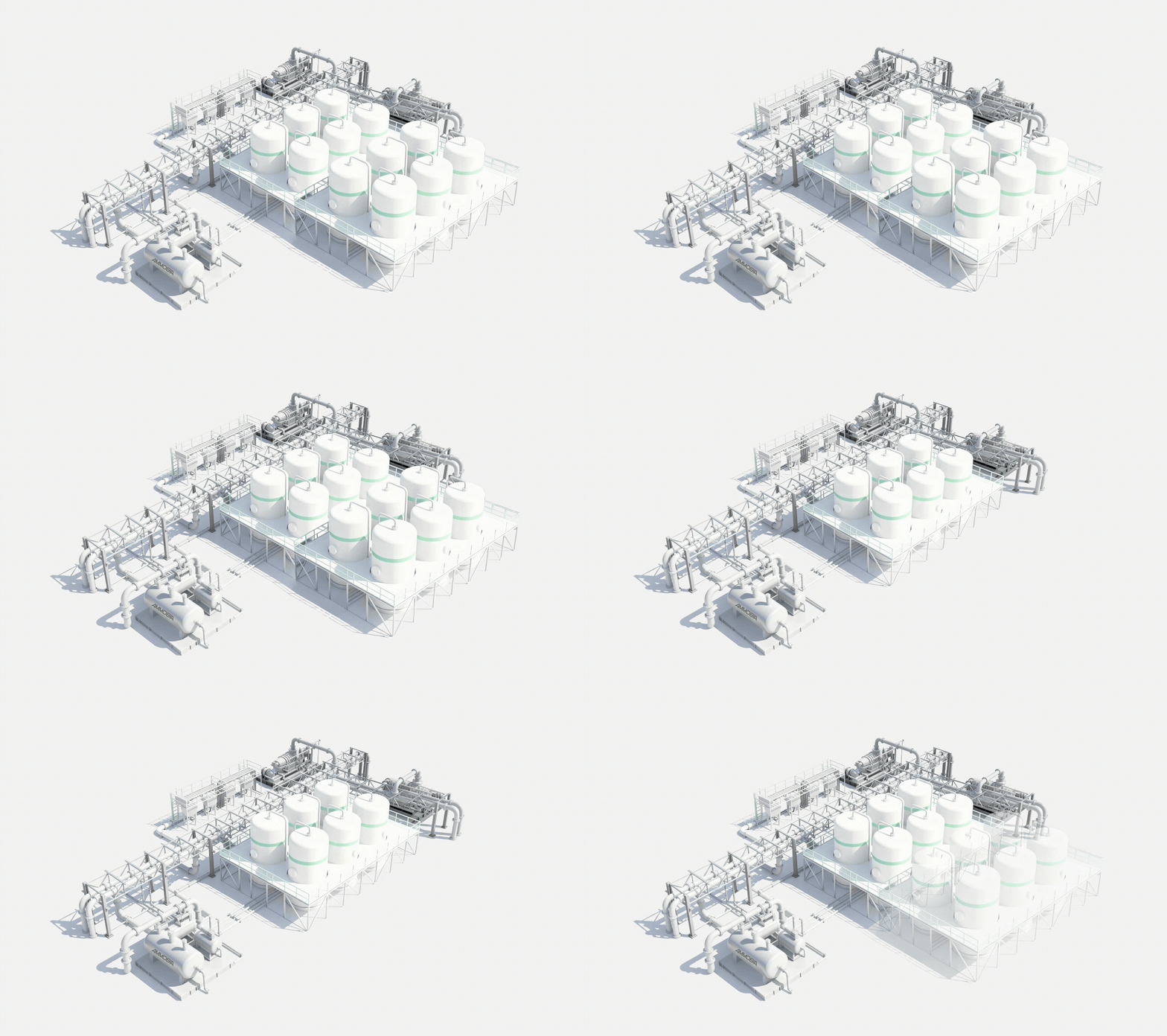

Modular architecture
Standardized process modules enable progressive capacity build-out— without redesigning the core process.

Low-pressure design reduces capital cost
Operating at lower pressures enables simpler equipment, lower material requirements, and more efficient manufacturing and supply chains.

Designed for medium-scale ammonia production
An ideal fit for renewable energy projects in the 100's of MW, and adaptable up to GW scales
Modular by design. scalable by demand.
Ammobia’s modular reactor technology lets you multiply production by adding parallel units—no core process changes required.
Low-pressure design reduces capital cost
Operating at lower pressures enables simpler equipment, lower material requirements, and more efficient manufacturing and supply chains.
Designed for medium-scale ammonia production
An ideal fit for renewable energy projects in the 100's of MW, and adaptable up to GW scales
Modular architecture
Standardized process modules enable progressive capacity build-out— without redesigning the core process.
TECHNOLOGY
Modular ammonia production without the 1B$ price tag
Feedstock-agnostic ammonia production, delivered at radically lower pressures for step-change improvements in plant economics.
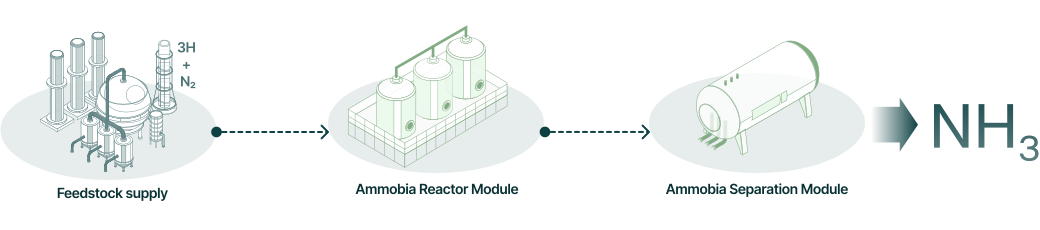

Low pressure:
Reactor and process operate at feedstock supply pressure
No syngas compressor required

High conversion:
World’s best single-pass conversion
Recycle rates minimized

Integrated separations:
Purpose-built separation system efficiently liquefies ammonia for end-use

Modular construction:
Low-pressure design enables standardized fabrication, expanding qualified suppliers and reducing capex.
NEW BUILD PLATFORM
Build new plants with Ammobia
Ammobia plants enable cost-effective, low-carbon ammonia at MW scale, deploying where hydrogen is available or wherever demand exists.
New Build
Retrofit
Frequently asked questions
Why is ammonia so important?

As the second most-produced chemical worldwide, ammonia already feeds half the world's population through fertilizers and serves as critical feedstock for chemicals and plastics. Today, we also see rapidly growing demand across maritime shipping, power generation, and energy storage, positioning ammonia to play an even larger role in the global economy by 2050. Beyond its role in powering four multibillion dollar industries worldwide, conventional production (guided by the 100-year-old Haber-Bosch process) currently accounts for almost 2% of global GHGs. So solutions that successfully optimize operations to lower ammonia production's costs, as well as lower its carbon intensity, can bring meaningful impact that benefits both profit and planet.
What is the difference between Ammobia and Haber-Bosch?
Unlike the traditional Haber-Bosch process which requires extreme heat and pressure, Ammobia uses advanced materials and reactor technology within an optimized synthesis loop to produce ammonia at lower temperatures and pressures. We call this the Haber-Bosch 2.0, a critical evolution that is more efficient, and less carbon intensive. Combined with its energy source-agnosticism, Ammobia unlocks cheaper, cleaner ammonia production model for asset owners and buyers across agriculture, maritime shipping, power generation and energy storage, and chemical feedstocks.
What types of energy sources is Ammobia's technology compatible with?
Ammobia's technology is energy source-agnostic — and therefore hydrogen-agnostic — meaning it works seamlessly with green, blue, pink, grey, and other hydrogen sources. Ammonia is classified by how it's produced: grey ammonia is made using natural gas via the conventional Haber-Bosch process and is the most common today; blue ammonia follows the same process but captures the resulting CO2 emissions; pink ammonia uses nuclear-powered electrolysis to produce hydrogen; and green ammonia uses renewable energy-powered electrolysis, making it the cleanest option. "Low-carbon" or "clean ammonia" are umbrella terms for any production method with significantly reduced or eliminated emissions, including blue, pink, and green. Regardless of your energy mix, Ammobia helps unlock a flexible and future-proof pathway to low-cost ammonia production.
Why does Ammobia's technology cost significantly less to build than a conventional ammonia plant?
Ammobia's technology costs significantly less to build than a conventional ammonia plant because its modular, smaller-scale design eliminates the need for massive centralised infrastructure. By operating at lower temperatures and pressures, it removes the need for the bespoke, high-cost equipment — like compressors — that typically drive up capital expenditures for a conventional plant. With a lower plant capex, green ammonia production becomes more accessible and practical — achieving both lower costs and step-change progress toward global decarbonization goals.
Why can Ammobia's technology integrate with intermittent renewable energy sources more effectively than conventional ammonia production facilities?
Unlike conventional ammonia plants that require continuous, large-scale operation to be economical, Ammobia's modular plants can ramp up and down to match the intermittent supply of renewable energy sources. It does this without excessive wear or efficiency loss, which means the plant can be powered predominantly by cheap or curtailed renewable electricity, dramatically reducing energy input costs and making clean ammonia cost-competitive with conventionally produced ammonia.
GET IN TOUCH
Choose the fastest route to low-cost ammonia

Fueling the world with low-cost, low-carbon ammonia
